Tuesday, 28 February 2017

To Have and Have Not

Ernest Hemingway is one of those authors whose books can put hair on your chest.  His entire oeuvre screams masculinity.  In the hands of a less talented writer, his works would have no doubt slipped into caricature.  To Have and Have Not is no exception to this rule.

Told with Hemingway's signature sparseness, the book follows the tale of Harry Morgan. Morgan is a retired cop running booze and the occasional person between Cuba and Florida.  The story picks out a few of his jobs when he is down on his luck as well as focusing on his married life.  To Have and Have Not also focuses on the "haves-" the rich contingent of Key West.  The stories of Harry and the wealthy provide a stark contrast. 

Image result for to have and have not bookThe bits about fishing and the sea are pretty okay.  The thing that I loved about this book, though, was the relationship between Harry and his wife Marie.  Marie is amazing.  She supports Harry and spars with him.  She loves him.  So often in crime stories, the woman puts up with the crime or ends up hating the man and it is not the case in this book.   Hemingway puts such care into showing that these two love each other.  He does this through a (somewhat surprising) sex scene told with only dialogue. He does is with the way off track speculations of writer and Key West big shot Richard Gordon.  The pair has a real chemistry and reading it made me want to watch the film again.  Humphrey Bogart and Lauren Bacall were perfectly cast.  I found it almost impossible to read the book without thinking of them.

Hemingway's novel is set in during the Great Depression. Like many stories of days gone by, though, it still rings true today.  This is a book about a man who is struggling to keep his family afloat in a time of great financial hardship.  Harry only takes starts taking the illegal jobs because he cannot make honest money.  While his crimes are going on, we are also shown what it is like for those that do have money.  Richard Gordon and his friends have lives that resemble a soap opera.  The rich have the time to get divorced, to be unhappy, while the poor are working to survive.  The rich have no idea about what the lives of the poor are like, despite their education.  The evident split between the rich and the poor is still reflected today.  And the lack of communication between the two classes makes the book still feel relevant. 

So, there you have it: To Have and Have Not.  I liked it. I mean, there's a lot to be said for brevity.
 

My next read is Virginia Woolf's To The Lighthouse.

Sunday, 26 February 2017

King Lear of the Steppes

At just seventy pages, King Lear of the Steppes sits firmly on the line between short story and novella.  The fact that Ivan Turgenev's tale is on the list at all feels a little bit like cheating, really.  In reading this, I get to cross a book off The List that took me no time at all to complete.

The book tells the story of Martin Petrovich Harlov, a thoroughly Russian landowner.  Believing that he will soon die he splits his estate between his two daughters (Anna and Yevlampiya), confident that they will look after him in his old age.  I think, even without the story's title, we can all see where this one is going. After being cast out by both Anna and Yevlampiya, Harlov becomes more despairing until his eventual death- crushed under a rafter while fighting the Tartars and Lithuanians.

Image result for a lear of the steppesThere are a couple of bits that I liked about Turgenev's reworking of Lear.  First of all, the lack of a Cordelia.  Harlov's despair is more complete because he does not have the respite of Cordelia's love.  His entire family turns its back on him after his act of foolish love and he has nothing.  He has nowhere to go and no hope.  I always have issues with Cordelia as a character.  For all that I know she is goodness and the ideal child, I take issue with how little Lear knows her.  He banishes her for loving him most and then spends half the play assuming she hates him.  I’ve understood how the ideal child could come from such a terrible father.  But in removing Cordelia, Turgenev removes this issue.  Harlov is alone.   

I also liked the fact that there Anna and Yevlampiya end up doing okay out of screwing their father over.  Lear is typical tragedy in that it punishes people, guilty or not, but King Lear of the Steppes is more forgiving.  Or perhaps it is more accurate.  People do terrible things and they go on living.  Yes, the daughters are thought of poorly in their father's area, but they can just leave once he dies.

I feel the need to keep this short.  King Lear of the Steppes is enjoyable.  I'm not too sure why it's on the list.  I fee like I've read better books that aren't.  Admittedly, some of the historical context which drives the story was lost on me- my knowledge of Russian history only really kicking in around the 1917 mark- but even so; I have read better books.


I am now on to To Have and Have Not by Ernest Hemingway.

Tuesday, 21 February 2017

The Lost Language of Cranes

The Lost Language of Cranes is a book that thinks it’s cleverer than it is.  Or, it is a book that is trying to be clever and failing.  Again, I’m glad that I had to read this one on a coach and all in one go because it motivated me to keep going with it.  I think I would have struggled a bit otherwise.
 
David Leavitt’s book tells the story of Owen, his wife Rose and their son Phillip.  Phillip is gay and the book kind of follows the gay culture and life in the East Village of New York City during the early 1980s.  Owen is also gay, but closeted and spends his Sundays with anonymous men in a porno theatre in the Village.  Rose has no idea.  The main narrative arc of the book isn't actually all that interesting (or well handled- the scene in which Owen comes out is wedged in the last twenty or so pages and the fall out just isn't dealt with, a fact which feels like such a loss). 

All the good bits of the book are the bits of the main characters' lives that don't relate to the others- Rose has had affairs in the past that were far more satisfying than her marriage, Phillip falls in love for the first time.  Naturally, the guy Phillip loves is a twat.  Owen's story isn't too interesting.  It's just a bit sordid and self-pitying.  He's a difficult character to root for.  He's very naive, ending the book convinced a one off liaison with another married man is going to lead to a relationship because this time, for the first time, he got the guy's name and phone number. He overlooks that while his marriage to Rose may be over there is less than nothing to indicate that the other guy's is on the rocks.

Image result for the lost language of cranesAnother thing that I just didn’t like about The Lost Language of Cranes is a particular scene.  Phillip and his father meet up for dinner without Rose after Phillip comes out.   While Rose is having a hard time with it, Owen is seething with jealousy and so proceeds to get into the nitty gritty of his son’s sexuality and former masturbatory habits.  This isn’t the worse bit.  Owen, asking for himself but dressing it up as a question for Phillip, brings up bisexuality.  This does not go down well, not because Owen seems to be trying to question Phillip’s sexuality, but rather because Phillip does not believe in bisexuality.  Philip refers to "this bisexual thing" as "an excuse, a way of avoiding committing yourself, or admitting the truth."  It's pretty offensive. 

There were good parts to the book, though. There's a whole subplot about Phillip's friend Jorene coming out to her adoptive parents before being kicked out of the house and disowned.  It's a really interesting story that just isn't explored enough.  So much of this story feels like it could have been great if Leavitt had focused on the right thing.  There is so much name dropping of areas of New York that would have made no sense if I hadn't visited there.  I could only imagine half of the locations because I've been to them. It's sad, but for pretty much all of the book, I wanted to be reading about different characters.  The book needs more Jorene and less fucking Owen.


I have now moved on to King Lear of the Steppes by Ivan Turgenev.

Friday, 17 February 2017

The Collector

I can't emphasise enough how much I enjoyed The Collector. I read the John Fowles novel in one go on a coach trip, totally absorbed. It was literally interesting enough for me to ignore snow. And I love snow.

Image result for the collector john fowlesJohn Fowle's book is the story of Frederick Clegg and his obsession with art student Miranda. After watching her for two years, Frederick kidnaps her and imprisons her in the custom made prison basement of his remote cottage. It's a fairly simple story and not that long- the book covers the same events twice- once from each characters' point-of-view and while this is a bit unnecessary at some points, the retelling really builds on the narrative events.

The dual perspectives allow for a pretty nice contrast between Miranda's relationships with Frederick and GP, an older man she knows in the real world. At times, Frederick seems more innocent than the slightly sleazy mentor-like figure who persuades Miranda that she wants to pursue a relationship with him until she is on the verge of begging him to be with her. Frederick is completely adverse to sex, he feels it cheapens Miranda. It's a shame that, like Inside Mr Enderby, it's another case of what appears to be an asexual character being a creepy sad-sack.

As I mentioned, it's a pretty simple story. It's something that I've found before with John Fowles.  I'm not sure what it is, but so often with him I feel like there's something I'm not getting and that's true again for this book.  There are so many references to artists that I could just tell I wasn't getting. If I knew anything about Goya other than the fact that Saturn Eating His Son exists, I am sure there are bits I would have enjoyed better. Ditto if I could remembered anything about The Tempest other than the fact that Miranda and Caliban are characters in it. But even without the added layers it's super enjoyable.

One thing I did get though was how much Silence of the Lambs was influenced by The Collector. It's all pretty surface level and blatent- the kidnap scence is so similar to Jame Gum snatching Catherine Martin, he keeps her locked in the basement, the man even collects butterflies.  I am so glad I got the chance to read this books in one go. Like a good horror film, it gripped me.  I know that if I had had to read it in bits it wouldn't have been even half as exciting.

My second coach book is The Lost Language of Cranes by David Leavitt. Needless to say I've already finished it.

Friday, 10 February 2017

The Fox

Image result for the fox dh lawrenceI read D.H. Lawrence’s greatly revered Lady Chatterley’s Lover quite a few years ago and I wasn’t that impressed.  It’s one of those novels that became so famous because it’s important rather than good- yes, it was one of the first books to deal with female sexuality, but it didn’t do it all that well.  The Fox, in comparison to this, is a slick little underrated novel (if at 65 pages it even earns that title at all).

The Fox tells the story of Nellie March and Jill Banford and their attempts to run a small farm in post-World War One England.  These attempts are scuppered throughout by a fox, a young soldier and generally not being all that good at farming.  But it is the soldier, Henry Grenfel, who really throws a spanner in the works; proposing to Nellie on what seems to be a whim he creates an air of jealousy and resentment from Jill that isn’t quite accounted for by a loss of a business partner.

The book was first published in 1922 and so, naturally, it’s ambiguous about the relationship between Jill and Nellie and that’s what makes this book so good.  The first sentence of the story tells us, “The two girls were usually known by their surnames,” and they are referred to as such throughout by the third person narration.  From the get go Lawrence is using language that is normally reserved for men to apply to these women and the masculinisation of women to imply lesbianism is one of the oldest tricks in the book.  The pair also share a bedroom- despite having at least one spare and there is a scene in which Jill nags Nellie to not stay up too late and come to bed which is one of the most stereotypically married conversations I’ve ever read.

On the other hand, Nellie does agree to marry Henry.  And, yes, this is partly so he stops kissing her (because this is 1922 and accepting marriage proposals to prevent sexual assault is apparently a thing) and, no she doesn’t believe that she will ever actually have to marry him.  But it raises doubts.  It is possible that Jill’s jealousy is not routed in losing her girlfriend, but in watching a friend that she assumed would be single with her have a possibility of a new life away from the failing farm.  It is stated in the book that Nellie does not see her arrangement with Jill, whatever it is, a permanent thing.  She does not expect them to grow into old ladies together.

Truthfully, the best part of this book is its ambiguity.  There are some parallels drawn between Henry and the fox that are far more obvious and less interesting- Jill insists on shooting the thing, while Nellie misses her chance to do so because she is fascinated with it in the moment she gains her best opportunity to do so.  The Fox has only been made into a film once, a thing that moved the action to Canada and removed all of the questions around Jill and Nellie’s relationship and that’s such a missed opportunity.  The book is good because it raises far more questions that it gives itself time to answer; there is no point in the thing if it is explicit.  Where Lawrence fails (to my mind) with Lady Chatterley’s Lover is the explicit and so the strength of The Fox is that everything is implication.  Everything is a relationship between the two women and nothing is.


My next book will be The Collector by John Fowles.

Sunday, 29 January 2017

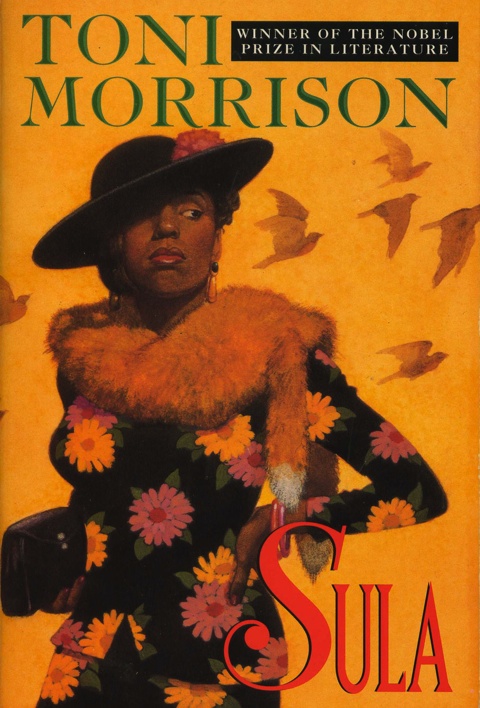
Sula

Image result for sulaI’m not too sure whether I enjoyed Sula or not.  It’s an interesting book, certainly; Toni Morrison is a talented enough writer that her work is almost always interesting to read.   It’s just- she does like to write about poor black communities in small towns in the Deep South.  To be fair to it, this book about is set in Ohio, but it’s very similar and as I’ve read quite a lot of her over the last year or so, it’s starting to wear a bit thin.

Sula tells the story of Sula Mae Peace and her childhood friend Nel.  More accurately, it tells the story of Bottom of the Medallion- encompassing most of the history of Sula’s family; her mother Hannah and grandmother Eva, Nel’s mother, Shadrack (a man traumatised by World War One) and the place itself.  It’s a lot to pack into under 200 pages.  In short, Sula’s family is less than conventional; they lead men into extra-marital affairs and once widowed have no interest in husbands.  Nel is more traditional- at seventeen she marries while Sula leaves for the big city.  The books up with the pair ten years later, after Sula returns and is largely rejected by the town that distrusts what it doesn’t understand.

There were great themes in this book.  It’s really interesting from a feminist perspective.  Shadrack is quite simply mad, but he is assimilated into the town with relative ease- after a few years no-one pays attention to his Suicide Day ritual.  It is not so easy for them to accept the perceived eccentricity of the Peace women, though.   Upon her return, Sula becomes a social pariah she is to blame for all the ills of the town for no reason other than she is an unapologetically independent woman.  Her unnatural femininity excludes her from the town (granted it doesn’t help that she sleeps with Nel’s husband so that he leaves her) and the town becomes united in its hatred of her.  She is their witch.

The one part where the book wasn’t quite what I wanted was the ten year interval.  The gap itself works and is a necessary narrative device, but I wanted to know more about what she was up to in Cincinnati.  We find out the Sula slept with a bunch of men (some white) but other than that, the details are thin on the ground and I’d actually really of liked to read a story about a headstrong young black woman in a big city in the 1930s.  That could be a really interesting book.  Nel I care about less.  She gets married and has children.  That is not such an interesting tale.

I’ve talked myself into liking this book more than I did originally.  There are some great parts.  Sula is a character who needs to be told, “You a woman and a colored woman at that.  You can’t act like a man,” and responds, “You say I’m a woman and colored.  Ain’t that the same as being a man?”  She is years ahead of her time and is duly punished for it; but she’s a little bit awesome in the face of a life that is going to give her nothing.  Even though in the end she isn’t shown as someone to be emulated, I quite like her for her fierce independence.


I’m now on to The Fox by D.H. Lawrence.

Saturday, 14 January 2017

An Obedient Father

Image result for an obedient fatherSo, I haven’t really been writing blog posts about the books I’ve read recently, there are a few books I’ve skipped writing about at all, but here I am, trying to get the blog back on track.  I did not pick my get back on track book wisely.   An Obedient Father is not a bad book; it’s just not a particularly great one either.  It’s kind of predictable and just a little bit trite.

Akhil Sharma’s debut novel tells the tale of the Karan family- more specifically Ram, his daughter Anita and granddaughter Asha.  The blurb promises that Ram is, “a man corroded by a guilty secret.”  To the surprise of absolutely no-one who reads even half as many books as I do, that dark secret is paedophilia.  Ram raped Anita repeatedly when she was twelve and the family covered it up to avoid scandal.  The book covers Anita suspecting that he may have similar designs on his eight year-old grandchild.  It’s such an overused narrative trope that at times it’s difficult to care about the characters at all.  Ram does himself no favours as he’s not at all guilty or penitent- he spends the majority of the part that deals with the actual rape justifying it.  I understand that it’s meant to show that he still loves his daughter and it’s not meant to be excusing rape or the incest… but it kind of is.

Anyway, Ram is also a corrupt official- again this seemed trite to me because I haven’t read about any other sort in any India literature I’ve read.  His saving grace originality-wise is that he’s not very good at it, and while playing the two big political parties (Congress and the BJP) off against each other after the assassination of Rajiv Gandhi, he fails spectacularly and ends up losing all the money he has embezzled.  Anita is very much the brains of their operation.  But Ram is the man and this is India.  So he is the public face.   This is actually one of the parts of the book I found most interesting, like A Fine Balance, it taught me things about Indian politics and history; things that happened within my lifetime that I am just ignorant of. 

The truth is that there was just something about this book that didn’t gel with me.   I’m not sure if it was the misogyny, shown my pretty much every character throughout the entire thing; or simply that the book is not long enough.  Sharma’s novel is only around 200 pages long and, yet, the narrative tries to wind and drift in a way that would only work if the book itself were twice the length it is.  It’s a book that I wanted to take it’s time, I wanted to luxuriate in it and I couldn’t.   It was frustrating and a real bar to enjoying the thing. 

So, there it is- my welcome back blog.  On the whole, I didn’t hate An Obedient Father.  I think it’s just one of those books that I’ve been waiting too long to read; checking the library for it every time I went with no joy.  I’d built it up too much in my head to enjoy it fully.  But at least I learnt something about Indian politics. 


Next up and already read is Sula by Toni Morrison.