Monday, 29 August 2016

The Long Goodbye

I know I’ve said it before when reading stuff by Eric Ambler, but I’m such a fan of film noir and hard-boiled detective fiction.  It makes me feel like such a bad feminist too, because it is mostly men telling women what to do and shooting at each other.  In fact, film noir’s all about the suppression of female power and sexuality (or it was in its early days in any case).  But I love it.  I love the writing style and the ridiculously complicated plots that bear so little resemblance to reality or to a crime anyone could ever hope to get away with.  The Long Goodbye is most definitely one of these, but it is so much more than this too.

It’s book six in the Philip Marlowe series by hard-boiled granddaddy Raymond Chandler.  It’s been a few years, but I have read The Big Sleep and Farewell My Lovely, the first two books in the same series, as well.  And while nothing Chandler wrote could ever live up to the former, The Long Goodbye is still pretty damn good. 

Image result for the long goodbye bookThe part of the Wikipedia article that summarises the plot is pushing 700 words, so I won’t even really try here.  Essentially, Marlowe is asked to investigate the murder of a friend’s wife, it looks like his friend did it especially when said friend flees to Mexico and kills himself.  Things get complicated. 

Anyway, one of the main things that I like about the book is that it does actually acknowledge male weakness and the trauma of war.  Most the main mystery is linked to the back story of three soldiers who became friends while fighting in World War Two and the injuries one of them sustained while fighting.  One of the central messages of the book seems to be, as one character puts it, “the tragedy of life… is not that the beautiful things die young, but that they grow old and mean.”  The only reason the whole mess happens is because the men come back from war and they come back changed.  Even Marlowe doesn’t escape.  He is less assured that in earlier books, more prone to doubt.  Vulnerabilities show that don’t crop up in The Big Sleep.  He is no longer a young man, he is aging and years of alcoholism have taken their toll mentally and physically.  More than this, he has a home now, a mailbox and a front yard.  He isn’t just a detective; he is a man who has a mortgage to pay off.

I enjoyed this book.  It is dark as all hell.  Chandler’s descriptions of Marlowe’s experiences of as an alcoholic are disturbing on a visceral level.  It somehow manages to weave phrases like, “Don’t push me.  Give me time.  The worms in my solar plexus crawl and crawl and crawl,” together with a mystery that, in all honesty, has a fairly sill resolution.  And it works.  There is no way it should work, but it does.  Chandler was always one of those writers who had a real understanding of the dark poetry of lowlife.  That’s why I love hard-boiled fiction so much.  It takes something shabby and beautifies it through the prism of a well turned phrase.  The Long Goodbye ultimately made me want to go back and reread Chandler’s early work to see if I can see the cracks in Marlowe’s façade and it’s that addictive quality that really makes his works great.


Next time: Iris Murdoch’s A Severed Head.

Sunday, 28 August 2016

White Noise

I accidentally read White Noise in one day.  I’m not sure how I managed it, because it’s not that unputdownable and I had a lot of things to do on the day that I read this book.  I’m going to chalk it up to procrastination.  That’s how I read a lot of books.  So, I shirked my responsibilities for an entire day to read this book, and I’m shirking them again now to write about it: that’s how you succeed in life.

Image result for white noise bookDon DeLillo’s novel is a hard one to describe plot-wise.   It’s about university professor Jack Gladney, creator of Hitler studies, who is happy.  He has a happy family life with his wife and various children from each of their various marriages and there’s no tension caused by the blended family.  He is happy, they are happy- there is no other word for it.  The only thing that blights Jack’s happiness or his wife Babette’s is the fear of death.  Although say they want to be the first to die so as to not have to live without the other, Jack wants to live for as long as possible.  He fears death to the point that he almost craves immortality.  After nothing major happens to the characters for 120 pages or so, there is The Toxic Airborne Event.  Despite sounding like a sketch from That Mitchell and Webb Look, this is a plot device to make Jack confront the horrible reality that he, too, is mortal.

It’s the second half of the novel that really contains the entire plot, but somehow I enjoyed the first half more.  There’s a very good chance that I was a little burnt out (it has been a while since I read almost 400 pages in a day), but I liked the charm of nothing happening and hanging out with this pretty quirky family.  Instead of actually writing about the book properly, I might just pick out bits that I liked.  Jack has a fairly fun conversation with a doctor in which he is lying about everything in an attempt to have the doctor tell him he is healthy, as though the doctor’s words and his actual health are intrinsically linked and he can be cured by being told he is well (this is better put into the actual thematic context of the book, but funny out of context).  There are a fair few off the cuff remarks about Hitler that appeal to my sense of humour too.

One of the more obscure bits that I really enjoyed is near the end.  There’s this hospital run by German nuns and none of them believe in God.  Their faith is a pretense set up to reassure the world.  The fact that they are there are keeping up the faith, the old ways and traditions, means that others are free to abandon them and keep the comforting knowledge that tradition lives on.  And in turn instead of a life dedicated to God, the nuns live a life dedicated to the lie.  It’s brilliant stuff. 
I have little else to say about the book, maybe I read it too quickly, but it’s a really enjoyable read and highly recommended.  Go and try it yourself. 


I’m now moving on to The Long Goodbye by Raymond Chandler.  Spoiler: I love Raymond Chandler.

Friday, 12 August 2016

The Lost Honour of Katharina Blum

I wasn’t sure what to expect from The Lost Honour of Katharina Blum.  I know that Heinrich Böll won the Nobel Prize in literature (mostly because the cover of the book tells me so) so you’d hope he’d be good.  But then J M Coetzee has one of those and I can’t stand a bunch of the stuff that he’s written.  It is good, though I don’t know if it’s enjoyable.  The book is more than forty years old and it describes a society that is still recognisable for all the wrong reasons. 

Image result for The Lost Honour of Katharina BlumKatharina Blum is an innocent young woman who meets and quickly falls in love with a man who is, unbeknownst to her, a bank robber.  When she helps him escape from the police while leaving her flat a media shit storm naturally descends.  One journalist in particular, Werner Tötges, goes to town on her.  He leaves no stone uncovered in a bid to dig up any dirt in an attempt to vilify Blum in his paper Die Zeitung, leaving things like facts and morality firmly to one side.  It’s kind of how I assume The Daily Mail operates; Tötges’s calibre of journalism would certainly fit in there.

The problem I had with this book is that is left me despairing for society a little and especially tabloid journalism.  The only thing that has changed from 1974 is that access to media has gotten easier and so the scope for these kinds of bullshit tabloid lies has just gotten wider.  Not to flog an (unfortunately) very much alive horse but The Daily Mail’s sidebar of shame is a case in point of this.  People, women especially, are vilified for things as trivial as not wearing make-up to get a cup of coffee or having too many relationships.  It’s sad because this story could still happen today, and with our instant media it wouldn’t even take the four days of the novel for things to come to their crescendo.

One of my favourite parts of the book was in relation to how the tabloids sensationalise things.  Tötges interviews the other residences of Blum’s block of flats and most of them have little to say about her; she is a typical single woman who works and occasionally has men to stay; nothing shocking.  Tötges twists her into a woman with a revolving door for men.  Her employer describes her as a, “very intelligent, cool, level-headed person,” this becomes the much more lurid, “ice-cold and calculating.”  Tötges journalism has just enough journalism in it to not be libel, but it’s an amazing transformation of the truth. 

I feel like, in all this, I should write more about Katharina Blum herself.  She is an interesting character, meticulous and precise and I do like her.  But this isn’t her story.  It’s the story of her story, the construction of her media identity and the truth is that she as an individual matters little in this.  Again, this just leaves me with sadness that we have not built a better way to do the news or seemingly learnt any lessons in the forty-two years we have had since the publication of (to give th book its full title) The Lost Honour of Katharina Blum, or: how violence develops and where it can lead.


My next book is White Noise by Don DeLillo.

Sunday, 31 July 2016

Giovanni's Room

I enjoyed Giovanni’s Room so much.  James Baldwin was one of those writers who was so far ahead of his time that it’s almost unbelievable that he ever got anything published.  Following up on Go Tell It On The Mountain’s depiction of race, he wrote this; a book that sympathetically portrays a male homosexual relationship.  It was published in 1956; a time when it was still illegal to be gay in American (and a hell of a lot of other countries).  It’s staggering.  There’s more to it than just the achievement of not being super homophobic, though, this is a bloody good story.

Baldwin’s novel tells the story of David, an American man in Paris.  When his fiancée Hella leaves for the summer he begins an affair with Giovanni, an Italian barman in the club David frequents.  Naturally, this goes badly once Hella returns.  It’s such a simple story but it’s incredibly well told.  Post-affair Giovanni’s life falls apart and David is pretty unhappy too; the story is told as a flashback on the morning of Giovanni’s execution and, yet, the book doesn’t dwell on the misery.  It’s there, but it comes in every so often as a wistful melancholia rather than agony.  David no longer loves Giovanni at the time of the telling and it gives distance to the tragedy of the piece. 

The fact that both David and Giovanni are utter shits at times also helps.  David cheats on Hella more than once, always with men and yet still remains judgemental of the men he meets and sleeps with.  Giovanni just straight up belittles, “these absurd women running around today, full of ideas and nonsense, and thinking themselves to be equal to men… they need to be beaten half to death so that they can find out who rules the world.”  Despite this, I do like Giovanni.  He loves David who is too selfish and scared to love him back and this ruins his life.  He ultimately gives Giovanni up so that he can access his father’s money and then decides that Giovanni is pathetic when his heart is broken while he can still return to Hella.

Hella is another matter altogether.  I like Hella.  She doesn’t take David’s shit and argues with him just for the sake of it, to keep him sharp, to keep things interesting.  She is smart and she figures out the true nature of David and Giovanni’s relationship and she has the sense to leave.  She calls out misogyny when she sees it.  She is one of the only female characters that actually speaks and she is completely free.  It’s another case of Baldwin being ahead of his time.  Although she is bound by conventions of the period, she rules within those conventions. 

This book was written in 1956 and it could have been written today.  I can’t get over how ahead of its time it is.  I could tell you a thousand reasons why I was so blown away by Baldwin’s attitude to homosexuality, but it all can come down to one quote.  Jacques (a friend of David’s) is explaining his sex life, “You think… that my life is shameful because my encounters are.  And they are.  But you should ask yourself why they are… Because there is no affection in them, and no joy… Touch but no contact.”  Sex is not shameful because it is with another man, but because it is loveless and to say that in the 1950s is amazing.  I just wish that there were more authors like Baldwin around now, tackling the taboos that shouldn’t be in place. 


Now I’m reading The Lost Honour of Kathrina Blum by Heinrich Böll.

Monday, 25 July 2016

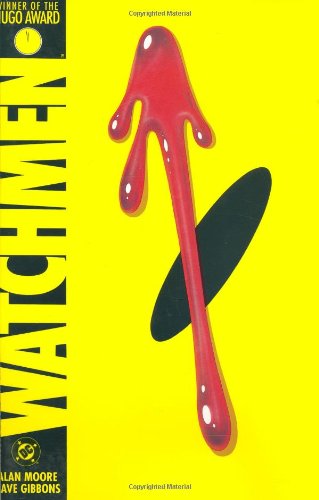
Watchmen

I saw the film version of Watchmen when I was in my final year of university and spent most of the three hour behemoth dodging the unwanted advances of a guy I was friends with at the time.  I tell you so that you understand that while I know the basic plot of the thing and the world in which it is set- superheroes, Vietnam, Nixon- some of the nuances were possibly lost on me.  Of course, I am here paying the film the compliment of assuming there was any nuance to miss.  I seem to remember enjoying it, as much as it’s possible to enjoy a film in which someone asks during a rape scene, “isn’t this so hot…?”

I assume others have seen the film too (probably in more auspicious circumstances) and so a recap of the plot is barely necessary.  I think that the only bit that really changes is the ending and, you know, spoilers.  Fans of the book don’t seem that keen on the film because apparently loads of bits have been cut out, but the only thing that really caught my attention was a subplot about a missing comic book artist/ writer and, to be honest, those are the worst parts.  I don’t care about pirates who are fictional even in a fictional world and are only linked to the real plot thematically and that’s all that that bit provides.  There is some philosophising about the nature of man, though, which is quite nice but really could have been explored more in prose.

I was a bit sceptical about reading Watchmen.  I was never really into comics as a kid and now I’m an adult I really don’t expect my books to have pictures.  I can read.  This is the only graphic novel on The List and I’m quite happy about that.  I know that Alan Moore is revered as one of the greats (and I’m sure in that world David Gibbons is pretty well known and respected too) but I just don’t get it.  Some of the art is nice enough, but it makes so much more sense to me just to have scenarios in books described to me.  There’s not enough detail to really express emotion in a comic book panel- there’s a scene in which Laurel confronts the Comedian over trying to rape her mother and his response is, “only once.”  And it should be awful but it’s so much harder to understand what the characters feelings and motives are and I’m sure there’s a knack to reading them but it’s not one that I care to pick up.  Give me words any day.

One of the bits that I ended up enjoying the most was something entirely coincidental about Adrian Veidt.  There are these extracts from various sources at the end of each chapter and one of them is private business and marketing correspondence for Veidt’s company and, more importantly, The Veidt Method (a course which promises happiness and health for a fee).  The material is a cross between wellness, positive thinking bullshit and those leaked scripts from Trump U.  It’s terrifying and hilarious that something like that can still be so on point when it comes to satirising big business.  I also enjoy the implications that Donald Trump is a comic book villain.

So, Watchmen.  To conclude; I do not like comics.  I do like philosophy.  More words are good.  (Imagine your own pictures to go along with that). 


I’m now on to Giovanni’s Room by James Baldwin.  

Saturday, 23 July 2016

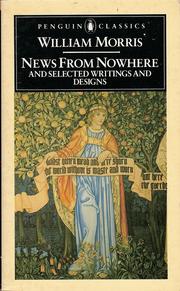
News From Nowhere

Until recently I had no idea that William Morris ever wrote books.  He was another obscure joke in my family when I was young.  My mum was jokingly convinced that I loved his wallpaper patterns when I was about seven and as a result I ended up with this strange pack of Morris-Pattern wallpaper postcards.  They would have all looked god awful in any room smaller than a football pitch, but they worked in postcard format.  Good for computer wallpaper, horrible for walls.  There was a quite nice khaki one with birds I seem to remember.

Anyway, Morris was also well into his socialism and News From Nowhere is effectively a manifesto on the subject.  It’s partly that, it’s also a bit gothic-novel-y in the sense it’s one of those stories that’s bookend with ramblings about how it didn’t happen to the main character, it happened to someone else. The book tells the story of not very imaginatively named William Guest a man from the nineteenth century who hops forward in time to see how things are shaping up in 2052.  Given that at this time it’s been 100 years since The Revolution, he is surprised at the changes.  They have sorted out all the social inequality and whatnot, but there are still no mobiles.  There are never iPhones in the imaginary future.

The novel itself is okay, I guess.  It’s a nice thought and I do like the ending; Guest returns to his capitalist hell but he returns with hope, or more accurately knowledge that things do get better and that he and his brethren are laying the foundations for a stronger future.  But… the whole thing is a little dry.  The plot is mostly Guest being shown things and having the socialist system explained to him, while his hosts laugh at how old and grizzled he looks.  And the ideas are so naïve.  The idea that socialism or communism would work is hard enough to accept but the one that nations would eschew education in favour of glorifying physical labour is impossible to believe.  I know I am biased when it comes to books but people always want to learn.  This is why there are non-fiction books and films and I don’t accept such a cultural shift. 

The other thing that I found interesting in this book where the dates.  Morris published more than one edition of News From Nowhere and, if the explanatory notes are to be believed, each new version set the time line of the revolution and of the socialist evolution back as Morris grew more disillusioned and cynical.  Even things as small as the date a bridge was built changes.  And I like that; for all the rhetoric and big dreams it’s awfully human to just give up a little bit.  To compromise those big dreams in the face of an unchanging reality.  I usually regret reading the explanatory notes, (especially in Oxford World’s Classics editions) either because they’re for Americans and so tell us just super patronising England-facts or because they’re riddled with spoilers.  But this time it made the book better.  And it made me like William Morris a little bit more. 


I’m now on to Watchmen by Alan Moore and David Gibbons.  There are more pictures than I’m used to in books for adults.  

Wednesday, 20 July 2016

Billy Liar

I’m not sure I really got the full amount of enjoyment that I could have from Billy Liar.  I read it while moving house and, naturally, most of my time and mind were taken up by the stress of that and then settling somewhere new rather than actually reading words.  On top of all of that, it’s been about a week since I actually finished the thing as I seem to have barely had a spare moment lately.  What I can tell you it that it’s good.  It’s pretty much what I was expecting, having read the blurb, but that’s no bad thing.

Keith Waterhouse’s book tells the story of nineteen year-old Billy Fisher; a dreamer stuck in a dead end job in a quiet Yorkshire town with an opinionated family and at least one too many fiancées.  Billy spends most of his working day finding new ways to not work and dreaming of moving to London and making it big as a comedic scriptwriter.  It would all be fairly standard kitchen sink drama (and in many ways the book is) but there is an element of surrealism that keeps creeping in.  Billy’s family and friends are all walking Yorkshire stereotypes, the book itself pretty much demands to be read in a Yorkshire accent, but somehow it’s better than just clichés.  The only thing that I can think that saves it is the brilliant balance between humour and tragedy.

The whole book is about comedy, Billy’s dream is to leave the Yorkshire pit towns, move to London and make it big.  Convinced that he’s the best thing to happen to comedy since sliced bread, he never shut ups with his jokes or his small successes.  He sells some jokes to famous stand-up Danny Boon and while his jokes are very much of the “take my mother-in-law” calibre when it comes to originality and despite the fact that no-one has really heard of Danny Boon, this fuels the fires for Billy.  This will lead to a great career, he thinks.  We know as readers that it will not.  Never more so is this shown the when Billy actually performs some stand-up.  He bombs.  It’s heartbreakingly relatable, who didn’t have dreams that were just unattainable when they were nineteen?

There’s also a wonderful element of farce that runs through the book.  Billy lies pathologically and this gets him into hot water all the time.  There’s a great scene in which fiancée number one (The Witch) is finally due to visit the Fishers for dinner.  At this point, Billy is forced to admit that his father was never in the navy and was never a prisoner-of-war, that the family do not have a budgie called Roger who was at constant threat of being eaten by the cat.  They also do not have a cat.  It’s such a well written piece of comedy and it’s thoroughly enjoyable because the lies are ridiculous. 

Waterhouse balances our view of Billy so well, we can laugh at him but also agonise with him.  It’s really very clever and it makes the book.  As I said earlier, I did enjoy Billy Liar.  I intentionally read it when I knew I’d be stressed and need something light and funny to take my mind off of things and I’m slightly sorry that I did that.  I couldn’t really give the novel my full attention at any point and I’m sure there are a hundred and one things that I missed in the book because of it.  On the bright side, I’m now really looking forward to watching the film without it being too greatly spoiled. 


Next time, the far more serious News From Nowhere by William Morris.  Yes, the wallpaper guy.