Saturday, 31 December 2016

2001: A Space Odyssey

I read 2001: A Space Odyssey in a day.  Suffice to say, it’s pretty great.  As an ex-film student/ current (but reluctant) film geek it appealed to me in quite a few ways and I’ve been saving it up.  It was nice to not be disappointed.
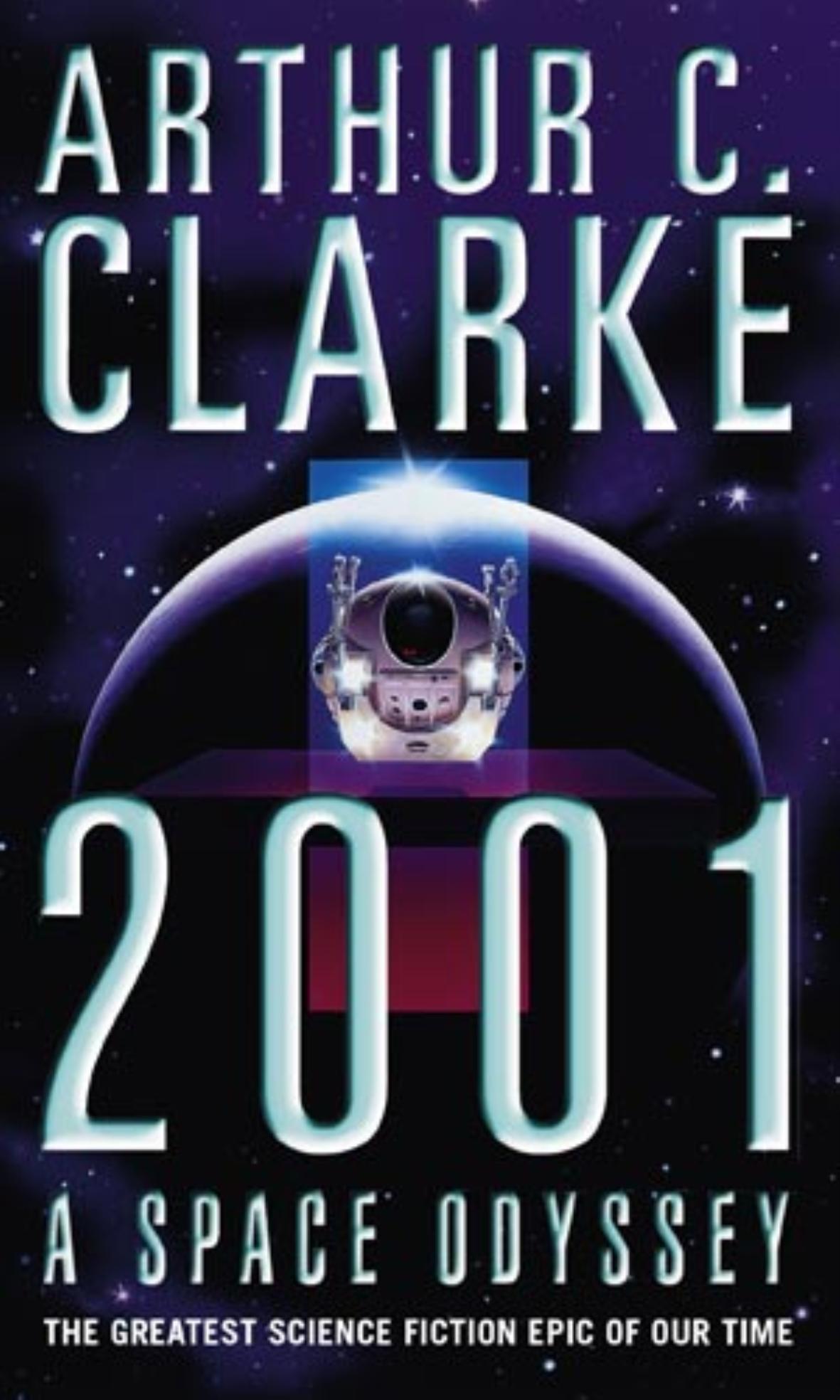
Image result for 2001 a space odyssey bookI studied Stanley Kubrick in university a lot.  I mean, there was an entire semester just dedicated to his work.  When I say that I have seen everything that man has directed, I am not exaggerating.  I’ve seen the early documentaries, I’ve endured Spartacus, I have watched Eyes Wide Shut more than once.  That’s how dedicated I am to this man.  And I love 2001: A Space Odyssey.  I didn’t- it took seeing it on the big screen of our seminar room to love it, but love it I do.  I don’t think I’ve ever gone into a book knowing so much about not only the plot, but the story of how the book came about itself and, I thought that meant that I wouldn’t enjoy it.  But it was like coming back to an old friend.  Granted, HAL 9000 is a bit too “murder the entire crew” for a conventional friendship.  But you know what I mean.

I think that Arthur C Clarke was the only unknown element of the entire book for me.  I know he’s this renowned sci-fi writer, but that doesn’t always mean that he’s going to be any good.  There’s a lot of very shit sci-fi in the world.  He is good.  The man can write a novel.  But… it’s not as good as the film.   I should be loath to compare the two because they are different media even if they are telling the same story.  But the book has always been so much an extension of the film.  It was only written in preparation for the film, so that Kubrick would have something to construct a screenplay from.  It is a rare circumstance in which the book and the film are two parts of a whole.

What the novel does is to give more detail than the film.   This is hardly surprising; the film consists of large chunks of dialogue-less narrative punctuated by the Blue Danube Waltz.  One part that particularly struck me was how Clarke wrote that famous edit- the graphic match between bone and spaceship that moves us from millions of years in the past to what was then the not too distant future.  It is seconds of film and an entire chapter of book.  Clarke documents the progression of Neanderthal man through the use of tools, mostly weapons and in less skilled hands it could have been a montage and it would have been awful.  The beauty of 2001: A Space Odyssey is its shear sparseness.  Kubrick understood the key parts of the narrative and discarded the exposition that is necessary to the book.  And he kind of changed cinema in the process. 

I know that this has been more about 2001: A Space Odyssey as a film than as a book, but it is a brilliant film.  The book enhances it, it made me remember just how much I love it.  Yes, the book has a plot that is far easier to follow than anyone could claim Kubrick’s masterpiece is.  But it is not genre defining in the way that the film is.  It is a good book, but I do not doubt for a second that if it had not been part of the process of making the film, it would have been forgotten as one in a long list of books Clarke wrote.   The book is good; the film is important.

Friday, 30 December 2016

The Mill on the Floss

Image result for the mill on the flossI didn’t get along too well with The Mill on the Floss.  It took me a good fortnight to read it, and yes, that fortnight did include a holiday- but that should have meant uninterrupted plane reading time.   There was some of that, actually, I think I read about a sixth of the book in one go and it still took me bloody ages.  It just wasn’t one of those books that I found myself wanting to go back to when I put it down; add in to that a birthday, a long weekend away, and some ludicrous working hours and you don’t exactly have the perfect recipe for a speedy read.

My second George Eliot read tells the story of Maggie Tulliver and her relationship with a handful of men, most significantly her older brother Tom.  This is actually a pretty well written part of the book, Maggie idolises Tom, she is his childhood shadow, following him around and trying to be like him and then growing older and giving up on a man she cares for because she knows to do otherwise will displease him.  It’s believable and it is well written.  The ending of the book, however, is stupid and ill-contrived.  I don’t want to spoil it too much, but it feels lazy.  As though Eliot needed to quickly draw things to a close.  As endings go it’s essentially a notch above, “And then they woke up and it was all a dream.”

I think this book was another case of setting my expectations by the blurb.  I thought that this was going to be the story of a young woman chaffing against a society and a family that deny her independence and deny her a mind.   Instead, Maggie spends a great deal of the book trying to work out how to best please her brother and her father so that they will love her better.  She is hardly chomping at the bit to get away and have a life of her own.  It’s a shame.  I think the book I imagined this would be would probably have had me more hooked.   That’s not to say that there aren’t flashes of the book that I was expecting- they just don’t endure.  Maggie will argue with Tom, but will always defer to him and his authority in the end.

The book’s also about social climbing, or the ambition to climb socially.  Unsurprisingly, Maggie and Tom’s father owns a mill and wants a better life for his son.   He borrows money so Tom can have an expensive education and move in higher social circles than he does.  Ultimately, he is prevented this dream by circumstance and by the opportunism of rich men.  It’s amazing sometimes, the things that do not change.  Again, I wanted to find this more interesting than I did, but I think that the crux of the issue is that I just didn’t care about Tom.  He’s dull.  Even when being shown through Maggie’s eyes, he is dull.

The Mill on the Floss isn’t by any means bad.  I just don’t think that it was for me.  It wasn’t a particularly memorable read.  I don’t think that I really get what is usually referred to as something wanky like “the earthy humour of the working classes” which does run through the book- there’s a nice joke about clothes being so old that they’re back in style again near the beginning, but aside for that it’s just a bit of a dry book.


My next book is 2001: A Space Odyssey by Arthur C Clarke.  In contrast, I read it in a day. 

Thursday, 22 December 2016

The Names

I wasn’t blown away by The Names.  It’s a shame, really- I so enjoyed the last Don DeLillo book I read (White Noise) and the blurb of this one makes it look like something right up my street.  It promises intrigue and murder and a secret language cult and murder.  I like a good murder.  The blurb also promises a reflection on the nature of language itself- is it all defining, or restricting?  The Names, we are promised, will ask.

Image result for the names don delillo DeLillo’s novel does raise some of these points, there are murders.  But- I found it lacking.  Now, I am more than willing to attribute this to the fact that I worked for more than 40 hours in the week that I read it.  And that I came down with a fairly terrific bout of laryngitis during this week which essentially meant that I wanted to read light hearted crap.  The Names is not light hearted crap.  It was not what I wanted. 

I think the bit that really got to me though was the unoriginality of the language cult.  What they do is commit murders with hammers for funsies, so far so good.  But because they’re really into words it’s not that simple.  They choose the victims who have names which linguistically link them to the place in which they are murdered.  What is this linguistic link, I hear you ask?  The victims’ initials match that of the place in which they are murdered!  While this sounds like the kind of overly simplistic writing you’d expect from a child (or an American TV crime drama) it’s actually a serious plot in the middle of a book about language.  You have to think that any book that features deep conversations about Aramaic wouldn’t have so lazy a murder plot.

I think one of the main reasons that I didn’t get on with the book is just that I completely failed to connect with any of the characters.  I can’t put my finger on why, but I just did not care about Jim Axton and his wife and stupidly named child.  I spent a good deal of this book wondering who the hell would call their child Tap; before it was revealed to be a nickname.  And Kathryn, the wife, she is given this quirk that people like to give her t-shirts.  It’s a shit quirk that depends on others and it doesn’t feel real.  It seems like she needed something to make her less ordinary and it really should not have been that. 

Anyway, there’s The Names.  I am pretty aware that in this blog I have written essentially nothing at all about the actual book but- y’know sorry not sorry.  This wasn’t what I thought it would be- it was a not very intriguing murder cult and one instance of pre-9/11 casual Islamophobia at an airport.  I didn’t get it.  I was disappointed.  So I decided to share my disappointment in truncated blog form.  I am over the 40% line: rejoice!

My next read is The Mill on the Floss by George Eliot.  

Sunday, 18 December 2016

The Grass is Singing

The Grass Is Singing took me by surprise.  Again, I think it’s a case of judging it by the blurb and setting my expectations towards something that wasn’t going to be there. Given that this is book 400 of The List, you’d have hoped I’d have learnt by now.  But no- I’m still making the same old mistakes.  At least I didn't expect it to be anything like Doris Lessing's sci-fi novel Shikasta, so that's something.

This is Lessing's first novel and it has a lot of tropes of a first novel.  It is short and to the point, you can see Lessing's style developing.

Image result for the grass is singingThe book tells the story of Mary and Dick Turner.  It kicks off with Mary's death (spoiler) a the hands of their servant, Moses, but most of the book follows Mary's life and her shambolic excuse for a marriage.  They are one of those couples who should clearly have never married- even in the start Mary's just up for it because she’s getting on a bit and people make her thing that she probably should.  So, Mary leaves that city to live with Dick on his farm in the middle of nowhere.   She hates it, she hates him, but most of all she hates the black farm workers.

I had so many problems with Mary because og her racism.  Lessing goes out of her way to make you like Mary in the early chapters- she overcomes adversity and in an independent woman in a man's world, she has so much potential as a feminist icon- and she's a horrible human.  The book is better for the fact that you don't want to dislike Mary, Lessing and Dick chalk so much up to her ignorance but it builds to an undeniable crescendo

The misleading blurb was also guilty when it came to the characterisation of Mary.  It talks of a kindness and understanding between her and Moses and I was expecting romance in the face of a negligent husband.  Even as the book continued, I expected a redemption storyline that just didn't emerge.  There's not let up or relief in The Grass is Singing.  It is not a happy enough book to allow that, like any newly arrived white colonials, the reader learns to expect the racism.  This isn't England, we are reminded, this is Rhodesia and things are different here. 

I'm still not sure is I like or enjoyed this book.  I have found that before with Lessing.  I can see why she won a Nobel Prize- she is brilliantly challenging.  And yet, I don't know if I ever look forward to reading her books; they are not page turners or what you want at the end of a long day of work.  But they are something.


Next time it's book 401 and the celebration of hitting 40% of The List being completed: The Names by Don DeLillo.

Wednesday, 30 November 2016

A Kestrel for a Knave

Image result for a kestrel for a knaveA Kestrel for a Knave is brilliant.  It’s another of those books that I’ve been meaning to read forever and have just had such trouble getting my hands on.  It’s always checked out of the local library and I can see why.  Barry Hines’s little novel is wonderful and, yes, it probably owes a lot of its popularity to Ken Loach and the fact that Kes was based on it.  But that doesn’t diminish just how good it is.

One of the things I loved about A Kestrel for a Knave is the way the story is told.  Essentially we follow Billy Caspar throughout the course of one day- the day Kes dies (spoiler, I guess).  A good half of the story is told in flashback and it works so well.   This makes the book bloody succinct.  As soon as Kes is found, we know that Billy succeeds in training her without Hines showing us the months of this arduous process.  It’s a nice way of letting us experience all of Kes’s lifetime without actually having to experience the boring bits of Kes’s life.  There’s an immediacy between Billy finding her and her death that would be lost if the flashback format wasn’t used or, indeed, if the book were split into chapters.

The story is simple and well told and so readable, but the best bit of the book is Billy’s passion.  One scene is set in an English lesson and while the boys are being taught the difference between fact and fiction, Billy recounts how he has trained Kes to the class and to Mr Farthing- literally the only good teacher in Billy’s entire school.  What could have been a dry procedural bit of text is transformed by Billy’s passion for what he is talking about.  It’s almost tangible.  And it helps so much that he is being egged on by Mr Farthing.  It is the only time in the entire book that Billy is encouraged to talk, or encouraged full stop.  It’s the moment of the book that gives the rest of it poignancy.   While Billy is being written off as useless by his mother, the other teachers and the man from the youth employment agency, we are shown that he has the potential to do so much more.

Another thing I loved about this book was the accents.  I almost always enjoy accents.  Coming from Kent, I’m not used to accents that you have to write differently to how words are spelled.  Maybe there’d be a few dropped ts or hs, but it’s not like the Yorkshire of A Kestrel for a Knave.  And while I’m not a hundred percent convinced of the veracity of these accents; I know a fair few people from various parts of Yorkshire and I’ve never heard even one of them use the word “thee” in quite the way the Caspar family do, I still love it. 

So, there it is; A Kestrel for a Knave.  Essentially, it’s a very readable and surprisingly interesting tale of it being grim up north unless you have a nice bird (and even then it not really being that nice)- that kind of working class despair that  we’re all going to become well acquainted with under Tory rule.  Also, there’s a completely inappropriate Thalidomide joke that took me by surprise, so that was a nice bonus. 


I am now on to book 400- The Grass Is Singing by Doris Lessing.  

Wednesday, 2 November 2016

Amerika (The Man Who Disappeared)

I like Kafka.  It’s been ages since I read anything by him, but I remember really enjoying The Trial, more so than I expected from a book that’s freely hailed as an absolute classic.  So I was looking forward to Amerika (The Man Who Disappeared) and I ended up being just a little bit underwhelmed by the whole thing.    

The book tells the story, such as it is, of fifteen year old Karl Rossman, a German boy sent to America after impregnating a much older housemaid.   The novel follows Karl as he tries, and ultimately fails to settle into various roles in New York.  Each chapter acts almost as a short story, a new chapter (if you will) in the tale of Karl’s American experience that has only limited connections to the previous ones.  There is nothing wrong with the narrative style, but there are a couple of issues with the book itself, as whole. 

Image result for amerika the man who disappearedFirst of all, this isn’t a whole.  Amerika is an uncompleted book and it’s very obvious- not in the least because it ends with a section entitled “fragments” which are essentially a few pages of snippets showing us where the plot was likely to go.  Uncompleted books are always of a challenge; it’s either a case of you can still see the bigger picture and are left a bit unfulfilled because it’s not there, or all you’re left with is a hundred odd pages of directionless build up and character building that goes precisely nowhere.  Amerika falls into the latter of the two categories.  Karl spends his time milling about between people and circumstances and nothing ever quite pays off. 

On top of this, Amerika was Kafka’s first novel.  At least, it was the first he started writing, even if it was far from the first of his work published.   First novels, like unfinished ones, can be a challenge.  They tend to be rougher around the edges, tipped with potential that is shown more clearly in later books.  That’s true of Amerika too.  Karl is as effectual as any of Kafka’s later characters- as in, not all.  He drifts through his encounters in America being acted upon and rarely acting except as a re-action to a change in his circumstance.  He does not drive the narrative.  This is something that Kafka is famous for, characters being acted upon by unknown forces for unknown reasons, but Karl isn’t acted upon by unknown forces.   He meets the people who drive his destiny and, because these people are knowable, Karl seems less of a victim and more of a wet blanket. 

I don’t want to be so negative about this book; there are some moments that are pure Kafka- Karl has to leave the house of the uncle he was staying with in part because a letter is delivered late.  But… it’s undeveloped.  The letter is delivered late because a man decides to do so.  The feeling of the pointless and unbeatable bureaucracy of The Trial is missing.  It’s not America that Karl cannot fight, it’s the Americans.


My next book is A Kestrel for a Knave, by Barry Hines.  

Saturday, 29 October 2016

The Portrait of a Lady

I was surprised by just how much I enjoyed The Portrait of a Lady.  It’s not perfect by any means, but I got into it very easily which really surprised me given how long it’s been since I read something like this.  Maybe that’s why I got into Henry James’s novel so quickly; it’s different from the stuff I’ve been reading of late.  For a book written in the late 1800s by a man that is essentially about marriage, it had some real feminist moments that I found myself cheering along at.  And for a long time, it didn’t feel anything like the 660-something page behemoth that it is.

The book is really split into two parts in my mind.  The first part follows American Isabel Archer navigating English and, more broadly, European society.  It features her rejecting marriage proposals like an absolute boss and taking very little shit from anyone looking to tell her how a lady ought to behave- all encouraged wonderfully by her aunt Mrs Touchett who, frankly, answers to no-one.  I like these two ladies, in case you can’t tell.  The second part is less enjoyable.  Isabel Archer becomes Isabel Osmond and her (much older) husband is a fortune hunting dick who, not content with having come into Isabel’s money, spends his time encouraging his utterly bland daughter to marry a rich man.  I liked this part less.

Image result for the portrait of a lady bookAs I mentioned, there are some parts of The Portrait of a Lady that are screamingly feminist and, given that the book was written in 1881, before the suffrage movement really kicked off feminism as we know it today I have to give James some serious kudos.  There is a part early in the book in which the previously lovely Lord Warburton is demanding that Isabel give him a reason that she does not want to marry him, because he’s such a good guy , you know.  And when he demands her excuse for not marrying him is just, “An excuse?  Must I excuse myself?”  It’s another one of those scenes that are from old books that are still worrying familiar.  How many times are young women still forced to justify not wanting to sleep with or date a guy just because, “I don’t want to,” isn’t deemed a sufficient answer?

James’s novel does go off track after Isable gets married.  It’s only partly her husband that I object to in that it’s a shame to ruin such a good character with such a poor excuse of a man.  The marriage itself comes about through the machinations of Madame Merle.  I wish I could enjoy Madame Merle, but really she is just a pale imitation of Dangerous Liaisons’s Marquise de Merteuil, so obvious in her treachery that it is impossible to fathom how Isabel doesn’t spot it a mile off.  The fact that Madame Merle is pretty unsuccessful in her later plots doesn’t help her case.  If you’re going to make a villain like that, make her bloody brilliant at manipulation.  Her motives are too human to be evil enough to really enjoy her.

Anyway, to summarise; The Portrait of a Lady was far more enjoyable than I was expecting. I didn’t really enjoy What Maisie Knew or, to be honest, The Turn of the Screw so I was a bit put off by the book’s length at first.  But something about Isabel Archer resonated with me.  She’s so easy to get behind as a protagonist and that makes her a hell of a lot of fun to read about.

I’ve now moved on to Franz Kafka’s Amerika (The Man Who Disappeared).